Six Guardians
You Only Live TwiceThe Six Guardians are a line of shore statues revered by the Ama of Kuro Island as protectors of their sea-bound community. They join everyday ritual to a prophecy about Death Castle: the islanders believe the Guardians will send a man from across the sea to kill the fortress’s ruler. When that man, James Bond, destroys the castle, the Shinto priest identifies the outcome as the fulfillment of their foretelling, giving the statues a role that is at once religious, communal, and structural to the story.
The statues and their setting
Kissy Suzuki describes the Guardians to James Bond while explaining why the nearby castle is a forbidden subject on Kuro. The figures stand on the island’s opposite shore, on the foreshore at the line of low tide. Five remain recognizable as squat stone bodies topped by round stones; the sixth has been mostly washed away. Their rough surfaces and simple construction are softened by white shirts, which islanders replace each month. According to Kissy, their ancestors placed them there centuries earlier.
At low tide, the figures stand exposed; as the sea rises, it covers them completely. In the islanders’ understanding, they continue to keep watch beneath the water. This placement makes the Guardians more than distant shrine images: their protection is imagined as operating within the same tidal world where the Ama dive. The statues’ visible position at the boundary between shore and sea gives physical form to their guardianship of people known as the Children of the Sea.
Ama belief and island ritual
The Guardians are associated with Jizo, whom Kissy identifies as a Buddhist god who protects children. The Ama regard the statues as defenders of their community and their work in the water. Their faith includes protection from sharks; Kissy says the animals do not trouble the divers and that the Guardians look after them. She recalls one diver’s rope catching on an underwater rock as an accident people continued to discuss, while insisting that the Ama otherwise come to no harm.
Their protection is renewed through an annual communal observance. At the beginning of June, when the sea has warmed after winter and diving begins, every person on the island processes to the statues and sings to make them happy and favourable. The rite makes the Guardians a shared focus of island life, not merely Kissy’s private belief. Her assurance that they will inspect James Bond when she takes him to see them also shows how the sacred figures are woven into ordinary conversation and decisions.
The prophecy and the figures’ presence
The legend attached to the Guardians casts the castle as a nearby supernatural threat. Kissy says the islanders imagine that hell has opened across the sea and that the devil himself has come to live there. Their elders regard the foreign ruler as the incarnation of evil from the West; the island’s prophecy answers that danger with a promised visitor, a man from across the sea who will slay the figure they call the King of Death. The prophecy thus connects the community’s local fears to a coming act of violence at the castle.
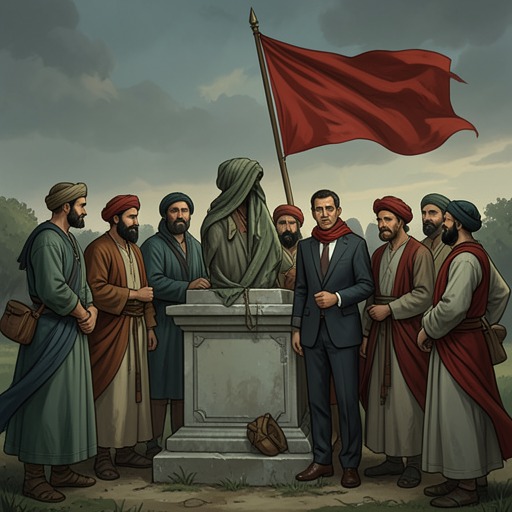
James Bond encounters the statues at low tide with Kissy. Five figures squat on a platform of large rocks, gazing toward the horizon; their stone bodies and boulder heads are dressed in rough white shirts. The sixth is reduced to a body without its head, which the narrative attributes to storm damage. Their humanlike appearance and immobile posture make them seem to preside over the water and everything beneath it. Bond, who has not previously felt such awe, briefly wants to kneel and ask their blessing. He resists the impulse, but bows his head and asks for good fortune in his enterprise.
Kissy then claps to attract the Guardians’ attention and makes an impassioned speech in which Bond’s name recurs. When she claps again, Bond wonders whether the round stone heads have nodded. The narration immediately qualifies the apparent movement: of course they have not. Kissy nevertheless leaves happily, asking whether he saw them nod; Bond firmly denies it. The exchange preserves two readings at once: a human gesture of faith gives the statues a momentary appearance of response, while Bond refuses to confirm a supernatural sign.
Fulfillment and narrative significance
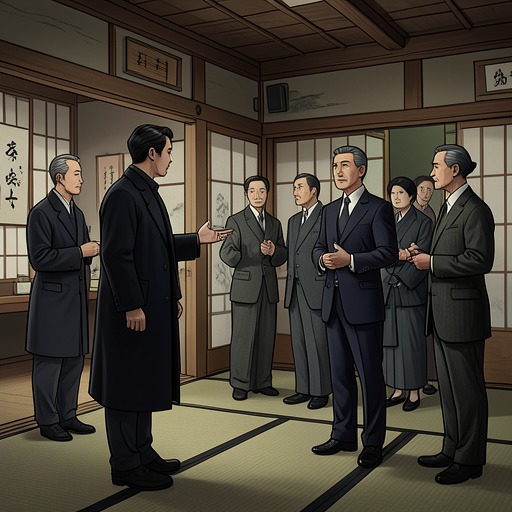
After the destruction of Death Castle, the Shinto priest tells Kissy that the evil ruler and his wife are dead and that the castle has been totally destroyed. He states that these events came about as the Six Guardians foretold, through the man from across the sea. The prophecy is therefore not merely repeated as island folklore: an authority within Kuro’s religious life explicitly interprets the outcome as its fulfillment.
That interpretation also shapes the community’s response to the wounded, amnesiac Bond. Kissy argues that Kuro should cherish and honour the hero brought to them by the gods, and appeals to the Guardians’ wishes as part of her plea to keep and care for him. The priest agrees to help conceal Bond for a time, though he expects Bond eventually to recover and leave. The Guardians’ function consequently extends beyond protecting the divers or predicting the castle’s fall: their legend supplies Kissy with a language for asking the island to shelter the man the prophecy has delivered. Their story binds sea, community, danger, and rescue together without requiring Bond to share Kissy’s belief in what he saw at the shore.